
Business Operations Review for Growing Organisations
ArborMark's operations review service helps SMEs, directors, and operational teams understand how their business actually works — mapping workflows, identifying inefficiencies, and building practical improvement priorities.
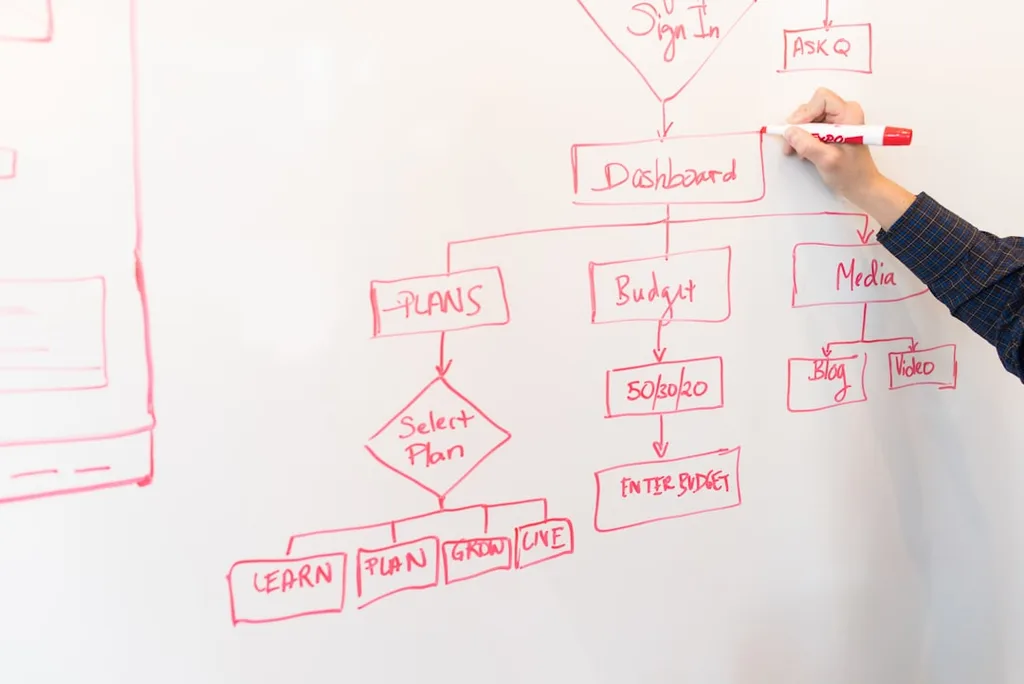
What an Operations Review Covers
ArborMark's operations review examines the eight core elements that most directly affect how a business delivers its work — and where operational improvement is most likely to be found.
Workflow Mapping
Documenting and visualising how work moves through your business — from initial enquiry or instruction through delivery, review, and completion. Workflow mapping identifies where stages are unclear, where handovers break down, and where work is duplicated or lost.
Role Clarity
Reviewing how responsibilities are allocated across the team — who owns which functions, where ownership gaps exist, and where role boundaries are unclear or overlapping. Role clarity is fundamental to consistent operations and effective team management.
Bottleneck Identification
Pinpointing the points in your operation where work backs up, slows down, or stalls. Bottlenecks often sit in approval chains, handover points, single-person dependencies, or under-documented processes that rely on institutional knowledge.
Reporting Review
Assessing how management information is gathered, presented, and used. Effective reporting supports timely decisions; ineffective reporting creates noise without clarity. The review identifies what management information would be most useful and what is currently missing or distorted.
Service Delivery Assessment
Reviewing how the business delivers its products or services — examining the consistency of the delivery process, the clarity of client-facing touchpoints, the management of client expectations, and the handling of issues or variations.
Systems & Tools Review
Understanding what software, systems, and operational tools the business uses — and whether these are configured, integrated, and used in ways that support operational efficiency. System reviews often reveal duplication, manual workarounds, and underutilised capability.
Supplier & Dependency Mapping
Identifying the external suppliers, contractors, and service providers the business depends on to deliver its work — and reviewing how those dependencies are managed, documented, and monitored. Supplier dependencies often represent hidden operational risk.
Capacity & Resourcing Review
Reviewing whether the business has the people, time, and resource allocation to meet its operational commitments — and identifying where capacity constraints are creating quality, delivery, or consistency problems that affect the business's ability to operate effectively.
Common Operational Challenges in SMEs
The following challenges are frequently identified in ArborMark's operations review work. They are not universal — but they reflect patterns commonly found in growing businesses.
Knowledge Locked in Individuals
Critical operational knowledge sits in the heads of one or two people rather than in documented processes. When those people are unavailable, processes stall, quality drops, and the business becomes fragile around key individuals.
Unclear Roles and Ownership
Team members are unclear about who is responsible for specific tasks, decisions, or functions. Work falls through the gaps between roles, and accountability is difficult to establish when things go wrong.
Reactive Rather Than Planned Operations
The business operates reactively — responding to problems as they arise rather than managing proactively. Leadership time is consumed by operational issues that should be handled at a lower level or prevented through better processes.
No Useful Management Information
Leaders cannot get clear, timely operational data from the business. Decisions are made on instinct or delayed data. The business lacks the reporting structures to support informed management.
Disconnected Systems and Tools
The business uses multiple disconnected software tools — resulting in duplicated data entry, manual transfers, inconsistencies between systems, and significant administration overhead. Teams spend time managing the systems rather than using them.
Supplier Dependencies Without Documentation
The business depends heavily on suppliers and contractors but has no documented processes for managing those relationships. Supplier failures, delays, or changes create disproportionate operational disruption because there is no contingency planning or formal dependency management.
The ArborMark Operations Review Process
ArborMark's business operations review begins with a scoping discussion to understand which elements of the business are most relevant, what information is available, who is involved in operational delivery, and what the primary improvement goals are. This scoping conversation shapes the focus and methodology of the review.
The review itself typically involves structured discussions with key decision-makers and operational leads; review of relevant documentation, workflows, and systems where these are available; workflow and process mapping based on the information provided; bottleneck and role analysis; and the development of structured observations and practical recommendations.
The outcome of the review is a documented set of operational observations, identified improvement priorities, and a structured set of recommendations — shaped around the agreed scope, available information, and the business's priorities and capacity to implement change.
The depth and scope of the review depends entirely on the agreed advisory engagement. A focused review of a specific operational function will look different from a whole-business operations assessment. Scope is confirmed before work begins, and can be adjusted by mutual agreement as the engagement develops.
Operations Review Outcomes
An operations review from ArborMark typically produces a documented set of outputs including: a structured assessment of the operational areas covered in the review; a summary of identified bottlenecks, role clarity issues, and process inefficiencies; mapped workflows for the key operational processes reviewed; a prioritised set of practical improvement recommendations; and guidance on sequencing and implementation based on the business's capacity and context.
Operations review support helps identify practical improvement priorities, but outcomes depend on implementation, team adoption, available resources, systems, suppliers, and business context. ArborMark's review provides the advisory foundation — the business is responsible for implementing recommended changes within its operational environment.
Recommendations are shaped around the information available at the time of the review. Where information is incomplete, assumptions will be documented and flagged. Additional rounds of review can be scoped if the initial review reveals areas requiring deeper investigation.
Operations review support helps identify practical improvement priorities, but outcomes depend on implementation, team adoption, available resources, systems, suppliers, and business context. Consultancy does not guarantee operational improvement, revenue growth, cost reduction, or business outcomes.
Recommendations depend on business context, available information, market conditions, operations, suppliers, staff, systems, budget, and agreed advisory scope.
Consultancy does not guarantee revenue growth, profit improvement, cost reduction, regulatory compliance, funding, investment, customer growth, or business outcomes.
Legal, tax, financial, accounting, HR, regulatory, insurance, and investment advice should be obtained from appropriate qualified specialists where required.
Request a Business Operations Review
If you want to understand how your business operations currently work — and where the practical improvement priorities are — start an enquiry with ArborMark. Scope is confirmed before work begins.
Start an EnquiryEnquiry responses are shaped around your business context. No guaranteed outcomes. Advisory scope confirmed individually.